
Best Single Origin Coffee for Beginners: 2026 Guide
Table of Contents
- Why Single Origin Coffee Is Perfect for Beginners
- Single Origin vs Blend Coffee: Which One Should You Start With?
- Best Regions for Beginner-Friendly Single Origin Coffee
- Tasting Notes in Coffee Explained: What You'll Actually Taste
- How to Brew Single Origin Coffee at Home: A Simple Guide
- How to Choose Your First Bag of Single Origin Coffee
- Common Mistakes to Avoid with Single Origin Coffee
- Frequently Asked Questions
Last Updated: September 14, 2026
Why Single Origin Coffee Is Perfect for Beginners
The best single origin coffee for beginners is a medium-roast washed bean from a well-known region: it delivers a clean, consistent cup that's easy to taste and hard to ruin.
Single origin coffee is sourced from one country, region, or single farm rather than a mix of beans (Checking your browser). That traceability is the whole point: when a bag tells you it's a washed Colombian from a specific micro-lot, you can learn something from the cup. Too sour? Too bitter? Those are fixable variables. With a blend, the roaster has already made those decisions for you, great for consistency, terrible for learning.
That's the throughline for this guide: single origin coffee isn't "better" than a blend, it's more educational. Below, we'll walk through regions, tasting notes, brewing, and the mistakes that trip up almost every first bag.
Single Origin vs Blend Coffee: Which One Should You Start With?
Start with single origin if your goal is to learn what you like. Choose a blend if you want a reliable, forgiving cup you don't have to think about.
Single origin vs blend coffee isn't a quality contest. It's a trade-off between clarity and consistency.
- Single origin: One source, one harvest, one flavor story. You taste the region. Small variations between bags are normal and instructive.
- Blends: Two or more origins combined, usually to hit a target flavor year-round. The roaster balances acidity, body, and sweetness so you don't have to.
The catch: blends are engineered to taste the same every time, which hides the very differences you're trying to learn. Single origin shows you everything, including the flaws.
For a first bag, choose a medium roast from a single region: enough acidity to notice, enough sweetness to enjoy while you're still calibrating.
Best Regions for Beginner-Friendly Single Origin Coffee
Brazil and Colombia are the two best starting regions for most beginners, followed by Guatemala and Ethiopia once you want to push your palate. Brazil leans nutty, chocolatey, and low-acid; Colombia sits in the middle with caramel sweetness, mild citrus, and medium body (Checking your browser). Both are forgiving across brew methods.
Here's how the major regions stack up:
| Region | Typical Flavor Profile | Acidity | Body | Best For |
|---|---|---|---|---|
| Brazil | Chocolate, nut, low citrus | Low | Full | First bag, milk drinks |
| Colombia | Caramel, red apple, mild citrus | Medium | Medium | All-round learning |
| Guatemala | Cocoa, spice, orange | Medium | Medium-full | Pour-over fans |
| Ethiopia | Floral aroma, berry, citrus | High | Light | Adventurous palates |
| Sumatra | Earthy, cedar, low acid | Low | Full | Dark-roast drinkers |
What most guides miss is that altitude and process matter as much as country: a washed Ethiopian grown high tastes radically different from a natural Ethiopian from the same farm. Washed coffees are cleaner and more predictable, making them the smarter first purchase; natural coffees are fruitier and wilder, a great second bag.
If you want a single-estate or micro-lot bean with a clear origin story, that's the direction to go. Traceability is where the learning happens.
Tasting Notes in Coffee Explained: What You'll Actually Taste
Tasting notes in coffee explained simply: they're the roaster's description of the flavors present in the cup, written to help you compare and choose. "Notes of chocolate" doesn't mean someone added chocolate. It means the bean's compounds, shaped by origin, process, and roast level, produce a flavor your brain recognizes as chocolate.
This is where beginners get discouraged. You read "citrus undertones and floral aroma" on the bag, taste something vaguely like coffee, and assume you've been tricked.
You haven't, you just haven't trained the skill yet. Flavor identification is learned, and the fastest way to build it is a stripped-down version of cupping, the industry's standard tasting method.
A 15-Minute Beginner Cupping You Can Do at Home
You don't need a lab or a certified palate, just two coffees, a kettle, a spoon, and a timer. Here's the sequence, scaled down for a kitchen:
- Weigh 8 grams of each coffee and grind coarse, like sea salt. Keep the two coffees in separate small cups.
- Pour 150 grams of water at about 200°F over the grounds in each cup. Start a timer.
- Wait 4 minutes. A crust of grounds will form on top. Don't stir yet.
- Break the crust by pushing the spoon through the top and giving it three gentle stirs. Lean in and smell, this is when most of the aroma releases.
- Skim the foam and grounds off the surface with two spoons.
- Slurp from the spoon. Slurping sprays the coffee across your palate and pulls air through your nose, which is how you actually perceive most flavor. It sounds ridiculous. It works.
- Write down three words per coffee before you compare them. Naming what you taste forces your brain to file it away.
Do this with two origins side by side, say a washed Colombia and a washed Ethiopia, and the difference stops being abstract. The Colombia reads as caramel and red apple, the Ethiopia as jasmine and blueberry. You didn't read that on a bag. You found it.
The Four Signals to Score
Pay attention to four things, and score each on a simple 1-to-5 scale so you have numbers to compare later:
- Acidity: the bright, tangy sensation, not the same as sour or bitter. Think of the juiciness of a green apple versus the burn of a lemon peel.
- Body: how heavy the coffee feels, from tea-like to syrupy. Whole milk versus skim milk is the classic comparison.
- Sweetness: the caramel or fruit sugar impression. It shows up most clearly in the aftertaste, not the first sip.
- Aftertaste: what lingers, and for how long. Count the seconds. A coffee that finishes clean and sweet for 20 seconds is usually a well-roasted one.
Mouthfeel and aftertaste are the most underrated signals. Beginners chase aroma because it's loudest, but finish is where quality hides.
Why Your Brain Fights You
Flavor is mostly smell (Retronasal odor perception requires taste cortex but orthonasal does not).
What to Do When You Taste Nothing
How to Brew Single Origin Coffee at Home: A Simple Guide
Match the Method to the Origin
| Brew Method | Best For | Why |
|---|---|---|
| Pour-over (V60, Chemex) | Ethiopia, Kenya, Guatemala | Paper filters trap oils and deliver a clean, bright cup that lets delicate floral and citrus notes through |
| French press | Brazil, Sumatra, Colombia | A metal mesh keeps oils and sediment, adding body and rounding off acidity, flattering for nutty, chocolatey beans |
| AeroPress | Colombia, Guatemala, any medium roast | Fast, forgiving, and easy to adjust; a strong all-rounder for a first bag |
| Drip machine | Brazil, Colombia | Consistent and hands-off; works best with medium roasts and a burr grinder |
| Moka pot | Brazil, Sumatra | Concentrated and heavy; suits low-acid, full-body beans but flattens delicate florals |
The Pour-Over Sequence That Works
Here's the sequence that works for a pour-over:
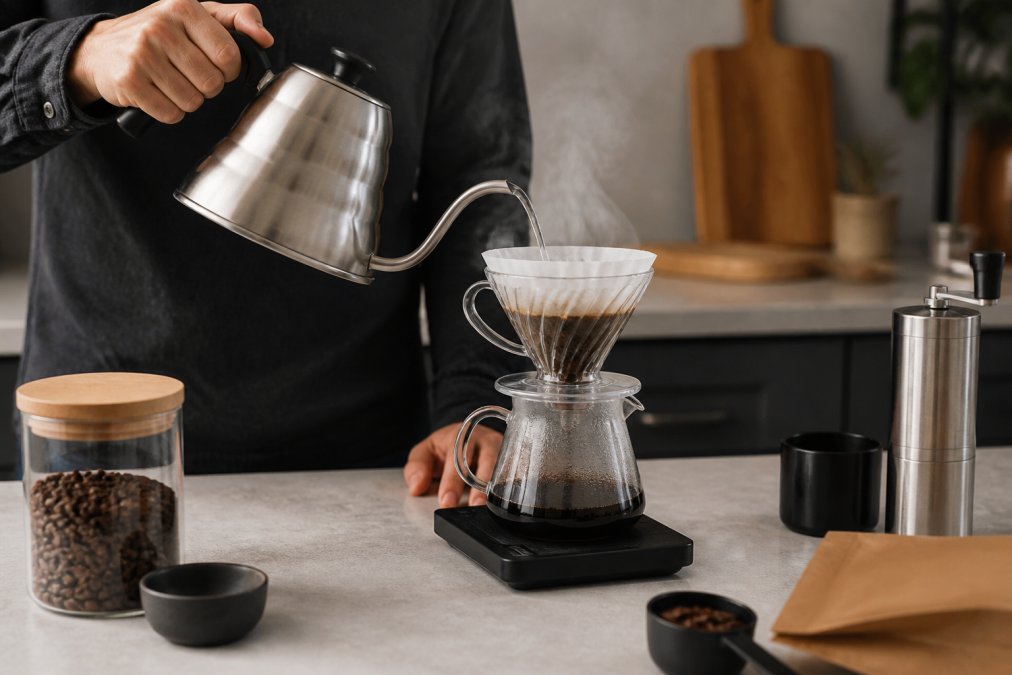
The French Press Version
Fixing the Cup Before You Blame the Bean
How to Choose Your First Bag of Single Origin Coffee
A quick decision framework:
Common Mistakes to Avoid with Single Origin Coffee
A few more that show up constantly:
Frequently Asked Questions
What is the easiest coffee to drink for a beginner?
Start with a washed process single origin coffee from Brazil or Colombia. These beans have lower acidity, a smooth body, and mild sweetness that most people find approachable. Look for tasting notes like chocolate, caramel, or nuts, which are familiar and comforting. Avoid very light roasts or high-acidity African coffees at first, as they can taste sour or tea-like if you're not used to them. A medium roast Brazilian coffee brewed in a drip machine is a safe, delicious entry point.
What is the difference between single origin and blended coffee?
Single origin coffee comes from one specific region, farm, or cooperative, so it tastes like that place. Blends mix beans from multiple origins to create a consistent flavor profile that's often designed to be balanced and easy to drink. For beginners, single origin coffee offers a clearer learning experience because you can taste how origin affects flavor. Blends are more forgiving and consistent, but they don't teach you about terroir. Try both, but start with single origin to train your palate.
How do I identify high-quality single origin coffee?
Check the roast date, not just the expiration date. Freshly roasted beans taste best within 2 to 4 weeks of roasting. Look for whole bean coffee, since pre-ground goes stale quickly. The bag should list the specific origin, farm, or cooperative, plus the processing method (washed, natural, honey). A roast level that matches your brewing method matters too. If the bag says 'best by' a year from now, it's probably not specialty grade. Buy from roasters who care about transparency.
Does roast level affect how beginner-friendly a coffee is?
Yes, roast level changes flavor and brewing forgiveness. Medium roasts are the sweet spot for beginners: they balance acidity and body, work well in most brewers, and taste good with or without milk. Dark roasts are bold and bitter, which some people love, but they can mask origin flavors. Light roasts highlight acidity and complex notes but require precise brewing; if you underextract them, they taste sour. Start with medium, then experiment as your skills grow.